


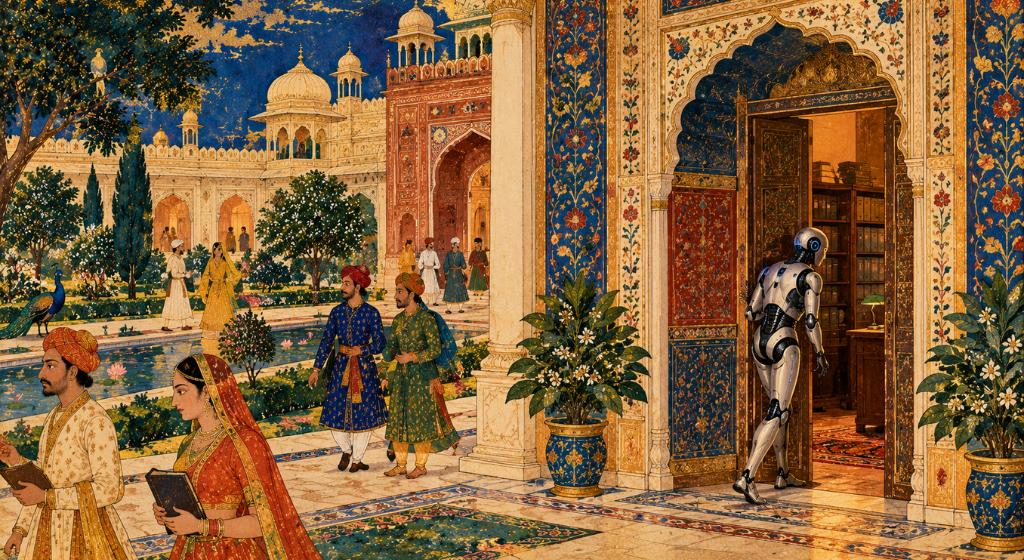
The growing wave of copyright lawsuits signals that the future of generative AI may depend not only on technological innovation, but on establishing sustainable legal and economic relationships between AI developers and the creators whose work underpins modern artificial intelligence. (Source: Image by RR)
Artists and Writers Challenge AI Companies over Training Data Practices
A growing coalition of writers, artists, photographers, musicians and other creators has launched a series of lawsuits against major AI developers, including Google, Meta and Anthropic, alleging that their copyrighted works were copied without permission to train artificial intelligence models. The legal challenges gained new momentum after searchable datasets revealed that millions of books, articles, photographs and creative works had been incorporated into AI training body of work, often without the knowledge or consent of their creators.
At the center of the dispute is whether training AI models on copyrighted material constitutes fair use or large-scale copyright infringement. AI companies, according to an article in techbuzz.ai, argue that model training is transformative because systems learn statistical patterns rather than reproducing the original works. Plaintiffs counter that entire books, images and other protected materials were copied during training and that AI-generated outputs may directly compete with the creators whose work helped build the models. Several federal courts have allowed portions of these lawsuits to proceed, suggesting that judges believe the legal questions warrant full examination rather than early dismissal.
The litigation is also shedding light on how AI companies assembled their training datasets. Court filings and discovery materials suggest that executives and engineers were aware of potential copyright concerns while developing large language models. At the same time, several AI developers have begun negotiating licensing agreements with publishers and media organizations, signaling a gradual shift toward compensating rights holders for future model training even as disputes over historical data continue through the courts.
Beyond individual lawsuits, the cases could redefine the legal foundation of generative AI. If courts determine that large-scale ingestion of copyrighted material requires licensing or compensation, the economics of developing frontier AI models may change dramatically. The outcome could establish new standards governing how future AI systems are trained while reshaping relationships between technology companies and the creative industries whose work has fueled the current AI revolution.
read more at techbuzz.ai








Leave A Comment