


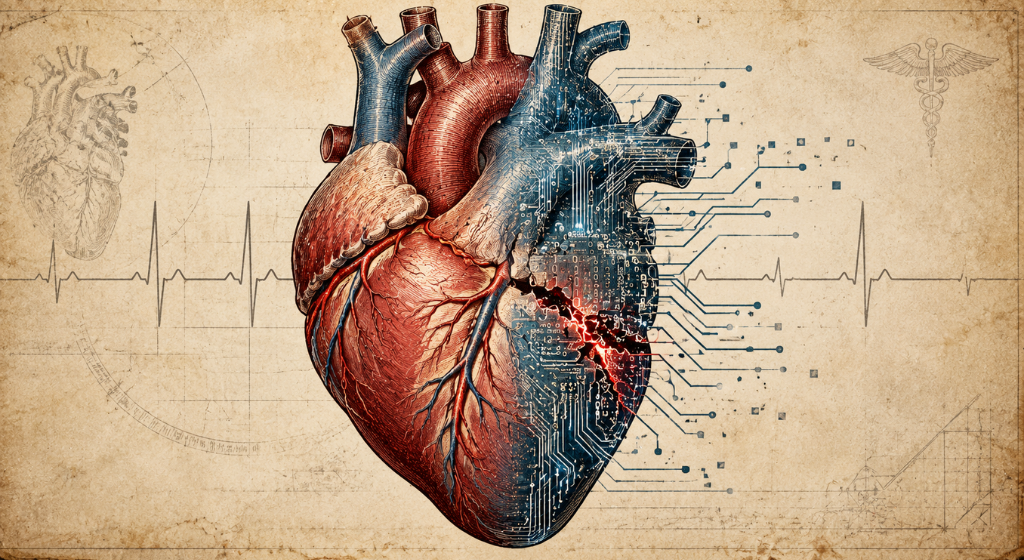
Biohub’s $500 million Virtual Biology Initiative represents a transformative step toward AI-powered scientific discovery, aiming to build the global data infrastructure and predictive models necessary to understand cellular behavior at scale and accelerate breakthroughs in disease prevention and treatment. (Source: Image by RR)
Predictive Models of Cells Could Transform Scientific Research and Medicine
Biohub has launched its ambitious Virtual Biology Initiative, committing $500 million to build the open data foundation required for AI-driven breakthroughs in biology. The effort, as noted in an article at biohub.org, aims to create predictive models of the human cell by generating massive, multi-modal datasets that go far beyond what any single institution could achieve alone.
At the heart of the initiative is a recognition that current biological data is insufficient for training advanced AI systems capable of modeling life at high accuracy. By scaling data collection across molecular, cellular, and tissue levels—and making it openly accessible—Biohub hopes to unlock a new era of scientific discovery where researchers can simulate biological processes digitally rather than relying solely on lab experimentation.
The project is designed as a global collaboration, bringing together leading institutions like the Allen Institute, Broad Institute, and international consortia such as the Human Cell Atlas. With support from partners like NVIDIA, the initiative will leverage cutting-edge computing infrastructure to process and analyze vast datasets needed to train next-generation biological AI models.
Ultimately, the initiative could transform medicine by enabling scientists to understand disease at a fundamental level and test treatments virtually before applying them in the real world. If successful, this effort may pave the way toward faster drug discovery, new therapies, and a future where AI can predict—and potentially prevent—disease at the cellular level.
read more at biohub.org









Leave A Comment