

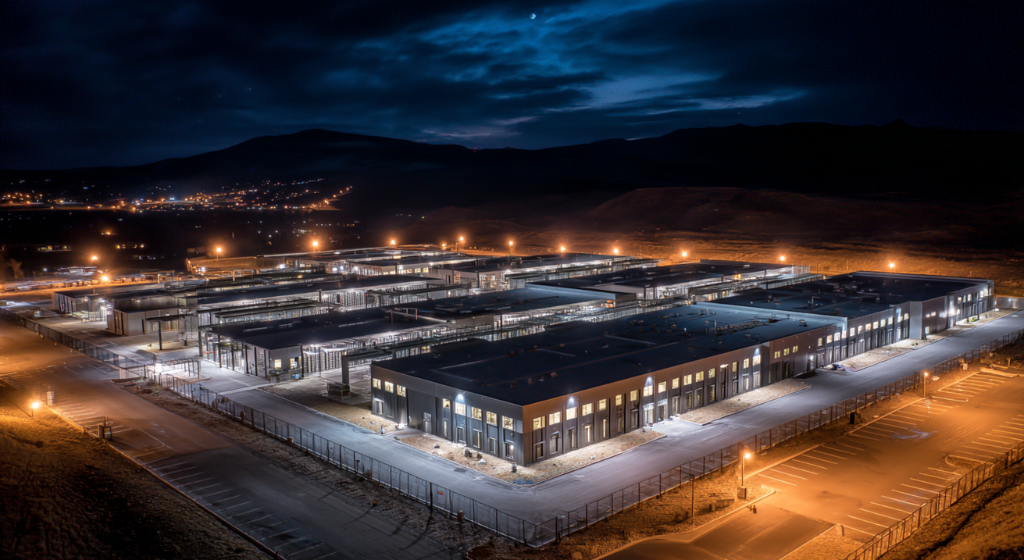
The downsizing of the Stratos Project underscores a growing reality for the AI industry: future infrastructure expansion will increasingly depend not only on technological ambition, but also on environmental sustainability, public acceptance and responsible resource stewardship. (Source: Image by RR)
Utah Project Serves as Test Case for Future AI Infrastructure Development
Investor and entrepreneur Kevin O’Leary has agreed to significantly reduce the size of his proposed Stratos Project data center development in Utah following growing opposition from local residents, environmental advocates, and state officials. The project, originally planned to span roughly 40,000 acres, will now be reduced by approximately half, though it will remain one of the largest data center developments ever proposed in the United States.
The decision, according to an article in theverge.com, comes after concerns intensified around the project’s potential impact on water resources, energy demand, and local ecosystems. Utah Senate President J. Stuart Adams publicly called for even deeper reductions and urged the project to adopt technologies that minimize water consumption while supporting efforts to replenish the shrinking Great Salt Lake. The debate reflects growing tensions between rapid AI infrastructure expansion and environmental sustainability.
Even after the downsizing, the Stratos Project is expected to cover roughly 20,000 acres—an area larger than Manhattan. Critics argue that projects of this scale can place enormous pressure on local resources while offering uncertain long-term benefits to surrounding communities. Supporters, meanwhile, point to economic development opportunities and the growing need for infrastructure capable of supporting next-generation AI systems and cloud computing workloads.
The controversy highlights a broader trend emerging across the AI industry: the race to build massive computing infrastructure is increasingly colliding with environmental, regulatory, and community concerns. As AI demand accelerates, developers may face mounting pressure to demonstrate that future data centers can grow responsibly while minimizing impacts on water supplies, energy grids, and sensitive ecosystems.
read more at theverge.com









Leave A Comment