

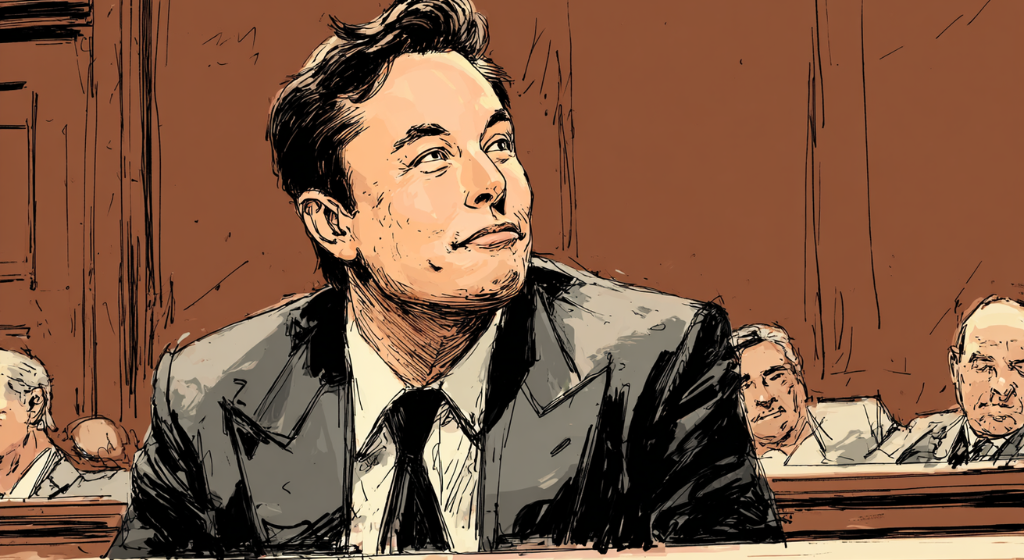
By allowing Elon Musk’s lawsuit to proceed to trial, a U.S. judge has set the stage for a high-profile reckoning over OpenAI’s nonprofit origins, its for-profit evolution, and the future governance norms of the AI industry. (Source: Image by RR)
Judge Says Evidence Supports a Jury Trial on OpenAI’s Mission Shift
A U.S. federal judge has ruled that Elon Musk’s lawsuit against OpenAI may proceed to a jury trial, marking a significant escalation in a legal battle that strikes at the heart of OpenAI’s controversial shift from nonprofit roots to a for-profit structure. U.S. District Judge Yvonne Gonzalez Rogers, according to an article in reuters.com, said there was “plenty of evidence” suggesting OpenAI’s leadership made assurances that its nonprofit mission would be preserved, creating enough disputed facts to warrant a trial rather than dismissal.
Musk, a co-founder of OpenAI in 2015 who departed in 2018, alleges that the organization violated its founding principles by restructuring to enable commercial expansion and massive financial partnerships. He claims he contributed roughly $38 million—about 60% of OpenAI’s early funding—based on assurances that the company would remain dedicated to the public good. The lawsuit accuses OpenAI leaders Sam Altman and Greg Brockman of orchestrating a for-profit transition to enrich themselves.
OpenAI has strongly denied the allegations, calling the lawsuit baseless and harassing, and framing Musk as a frustrated competitor attempting to slow a market leader. The company, along with Altman and Brockman, argues that Musk’s claims lack factual grounding and were filed too late. Judge Gonzalez Rogers said a jury will ultimately decide whether the case falls outside the statute of limitations when the trial begins, currently scheduled for March.
The dispute unfolds against the backdrop of intense competition in generative AI, with Musk’s xAI and its Grok chatbot now directly competing with OpenAI. Microsoft, a major OpenAI partner and co-defendant, has asked the court to dismiss claims against it, denying any role in aiding wrongdoing. As the trial moves forward, the case could set a precedent for how founding missions, governance promises, and commercial pivots are judged in the rapidly evolving AI industry.
read more at reuters.com











Leave A Comment