

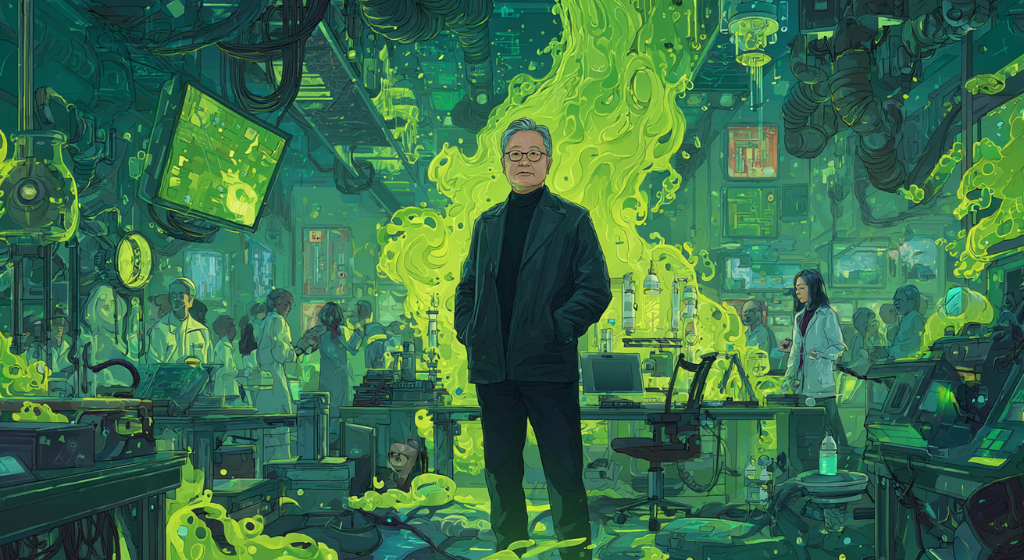
NVIDIA’s Ising models position AI as the key to making quantum computing practical, dramatically improving calibration and error correction to help transform fragile quantum systems into scalable, real-world machines. (Source: Image by RR)
Ising Models Designed to Scale Quantum Systems for Real-World Use
NVIDIA has introduced Ising, a new family of open-source AI models designed to accelerate the development of practical quantum computers. The models focus on solving two of the field’s most persistent challenges: quantum processor calibration and error correction. According to NVIDIA, Ising delivers up to 2.5 times faster performance and three times greater accuracy than existing approaches, marking a significant step toward making quantum systems reliable and scalable.
The Ising models leverage advanced AI techniques, including vision-language models and 3D convolutional neural networks, to automate calibration processes and enable real-time error correction. These capabilities, as noted in nvidianews.nvidia.com, reduce calibration timelines from days to hours and improve the stability of fragile quantum systems. NVIDIA positions AI as a foundational layer in quantum computing, effectively acting as the “control plane” that manages and stabilizes quantum hardware.
Adoption of the Ising models is already underway across a broad ecosystem of academic institutions, national laboratories, and quantum computing companies. Organizations such as Harvard, Fermilab, and Lawrence Berkeley National Laboratory are integrating the technology into their workflows, signaling strong early validation from the research community. NVIDIA is also providing tools, datasets, and microservices to help developers customize the models for specific quantum hardware environments.
The launch reflects NVIDIA’s broader strategy to position AI as a key enabler of next-generation computing platforms. As the quantum computing market is projected to surpass $11 billion by 2030, advancements like Ising could play a critical role in overcoming engineering barriers that have historically limited progress. By combining open models with its existing quantum and GPU infrastructure, NVIDIA aims to accelerate the transition from experimental quantum systems to commercially viable applications.
read more at nvidianews.nvidia.com











Leave A Comment