

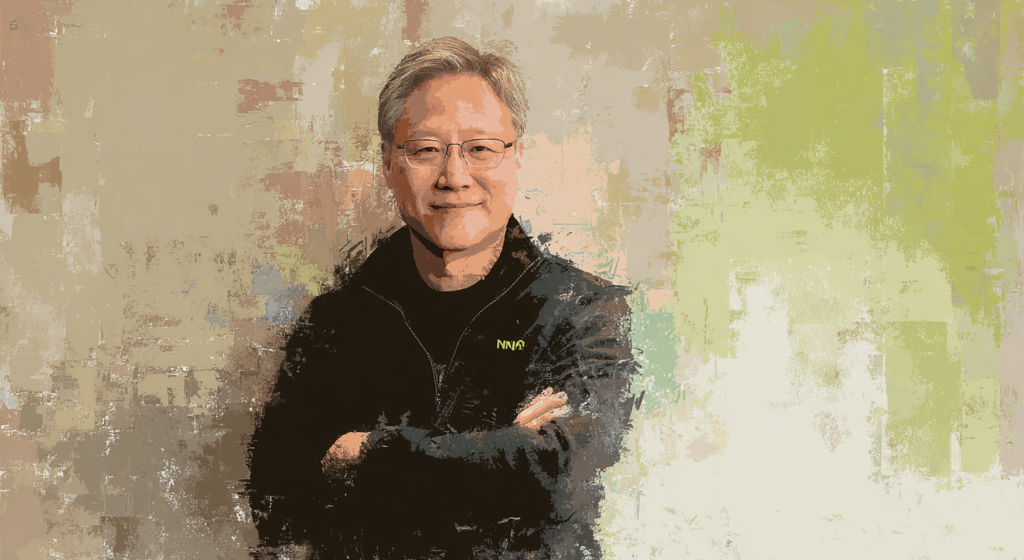
Nvidia’s $20 billion Groq asset deal shows the company is using its massive cash reserves to lock in critical inference technology and elite talent, reinforcing its dominance as AI workloads shift toward real-time deployment. (Source: Image by RR)
Deal Expands Nvidia’s AI Factory Architecture for Real-Time Workloads
Nvidia has agreed to acquire key assets from AI chip startup Groq in a deal valued at approximately $20 billion, marking the largest transaction in Nvidia’s history. Rather than a traditional acquisition, the deal is structured as a non-exclusive licensing agreement for Groq’s inference technology, with Groq’s founder and several senior leaders joining Nvidia. The move, according to an article in cnbc.com, underscores Nvidia’s aggressive strategy to consolidate AI hardware leadership through talent, IP, and platform expansion.
Groq, founded in 2016 by former Google engineers including TPU co-creator Jonathan Ross, has focused on high-performance, low-latency AI inference chips that compete with Nvidia’s GPUs in specific workloads. Just three months ago, Groq raised $750 million at a $6.9 billion valuation, making the scale of Nvidia’s payment particularly striking. While Nvidia is licensing Groq’s core technology and hiring its leadership, Groq will continue operating independently under new CEO Simon Edwards, with its GroqCloud business excluded from the deal.
In an internal memo, Nvidia CEO Jensen Huang said the agreement will allow Nvidia to integrate Groq’s processors into its AI factory architecture, extending support for real-time and inference-heavy workloads. Nvidia CFO Colette Kress declined public comment, but investors note that Nvidia ended October with over $60 billion in cash, giving it ample firepower for large strategic moves. The transaction echoes Nvidia’s September deal with Enfabrica, where it paid more than $900 million to license technology and onboard key executives without acquiring the company itself.
The Groq deal fits into a broader pattern of AI giants using licensing-plus-talent acquisitions to outmaneuver competitors. Nvidia has recently invested in CoreWeave, Cohere, Crusoe, Intel, and signaled intentions to deploy up to $100 billion into OpenAI infrastructure. As competition from custom chips at Google, Amazon, and startups like Cerebras intensifies, Nvidia’s Groq agreement signals a clear priority: owning the fastest path from AI models to real-time inference at global scale.
read more at cnbc.com





Leave A Comment