

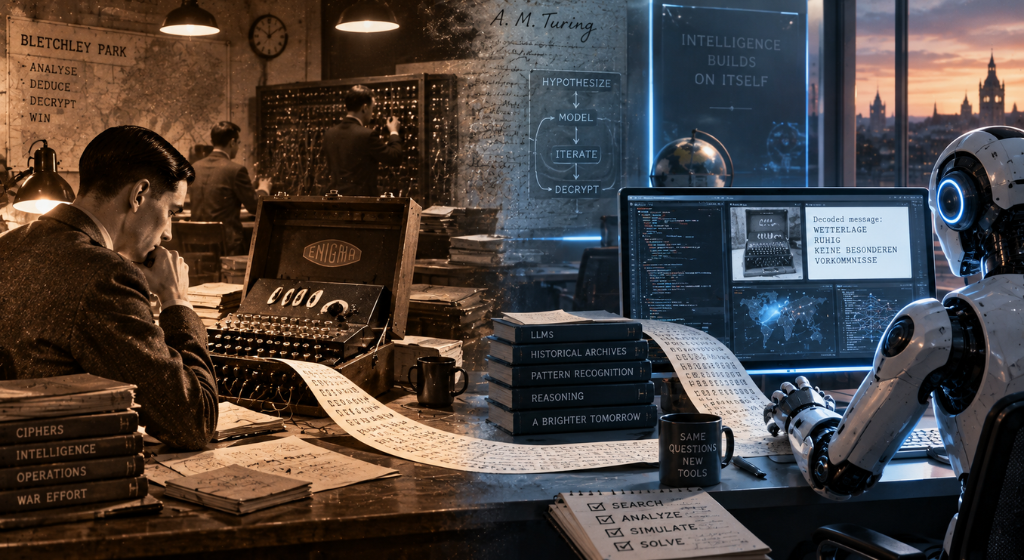
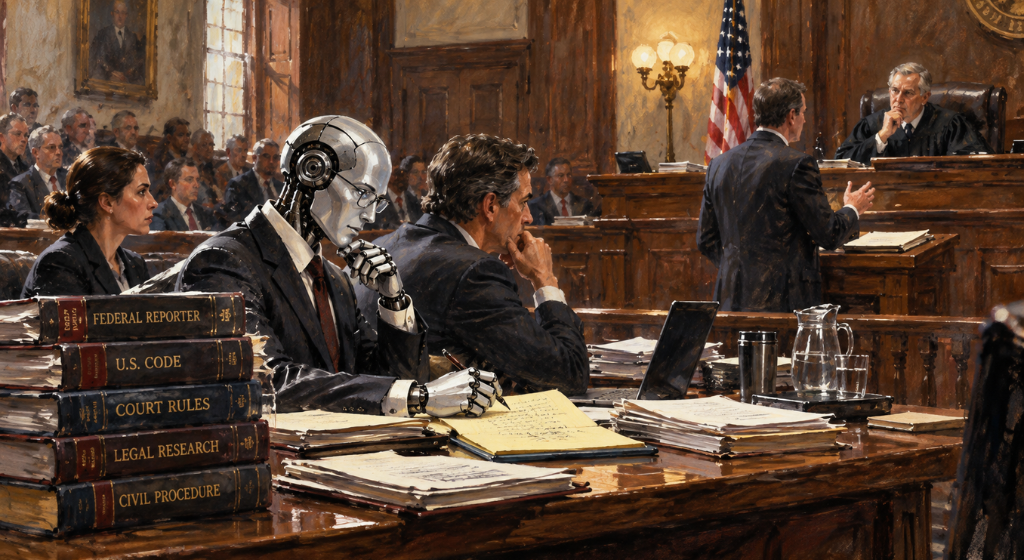
OpenAI’s GPT-6 Astra and Anthropic’s Claude Opus 5 helped cryptanalysts solve two long-unbroken Enigma messages, combining modern AI research and reasoning with one of computing history’s most famous codebreaking challenges. (Source: Image by RR)
OpenAI and Anthropic Models Help Solve Long-Unbroken Enigma Messages
Two frontier AI models have helped cryptanalysts solve separate messages encrypted by Nazi Germany’s Enigma machines that had remained unbroken for decades. Developer Carter Leffen tasked OpenAI’s GPT-6 Astra with finding an unsolved message in an Enigma archive and decoding it, prompting the model to conduct archival research, identify contextual clues, construct an Enigma simulator and ultimately recover the plaintext of a message that researchers had been unable to solve since 2005. Cryptology researcher Frode Weierud subsequently validated the result, describing Astra’s performance as comparable to that of a professional cryptanalyst and archive researcher.
The Astra result is notable for the amount of the research process the model organized itself. Rather than receiving a detailed sequence of cryptanalytic steps, it was given the larger objective and worked through the supporting tasks required to reach an answer. Weierud, as noted in article in techcrunch.com, estimated that the archival research Astra completed in roughly two days could take a human researcher weeks or months. Questions remain about some of the sources the model referenced, including archived messages described as belonging to a private collection, although Weierud suggested the material may have been available elsewhere online or through German public archives.
A second breakthrough followed days later when cybersecurity executive and cryptanalyst Jack Willis used Anthropic’s Claude Opus 5 to solve another previously unbroken Enigma message. Unlike Astra’s more autonomous approach, Willis supplied Claude with considerably more guidance, including information about the known signature of a particular German officer. The model used that clue to help recover the message, giving researchers a second AI-assisted Enigma breakthrough within days.
The results offer a striking modern connection to Alan Turing, whose wartime cryptanalytic work helped Britain decipher German Enigma communications and whose later ideas helped shape modern computer science and artificial intelligence. Most wartime Enigma traffic was decoded long ago, but a small collection of difficult messages survived because of issues including transcription mistakes and errors by their original operators. Weierud says only seven unbroken Enigma messages now remain, along with one message whose plaintext is known but whose encryption settings have not been recovered.
read more at techcrunch.com





Leave A Comment