


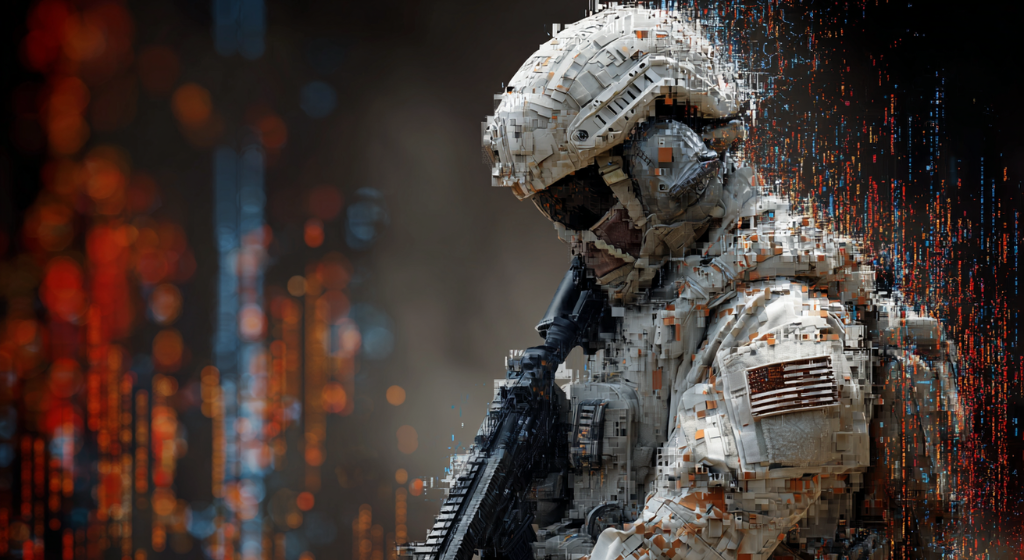
Davos 2026 revealed a widening divide among tech leaders, with some heralding AI as a driver of abundance and opportunity, while others warned that unchecked speed, weak governance and misplaced trust could make it one of the most destabilizing forces humanity has ever created. (Source: Image by RR)
Tech Leaders Lay Out Sharply Divergent Visions for AI’s Long-Term Future
Artificial intelligence emerged as one of the most dominant themes at Davos 2026, rivaling long-standing concerns around geopolitics, trade, and global competition. Tech leaders from Nvidia, Microsoft, Anthropic, Google DeepMind and X used the forum to outline sharply diverging visions of AI’s future—ranging from near-term superintelligence to deep warnings about governance, safety and social disruption. Unlike last year’s focus on model breakthroughs, discussions this time centered on implementation, infrastructure and societal impact.
Elon Musk struck an aggressively optimistic tone, claiming AI could surpass human intelligence as early as this year or next. He predicted a future of humanoid robots, economic abundance, and the elimination of poverty, while also warning that energy constraints—rather than chips—could soon limit AI expansion. Musk, according to an article in euronews.com, highlighted China’s rapid solar deployment as a strategic advantage, underscoring how AI competition is increasingly tied to energy policy.
Nvidia CEO Jensen Huang framed AI as a “once-in-a-lifetime opportunity” for Europe, arguing that the continent’s manufacturing strength positions it to leapfrog the software era and lead in AI infrastructure and robotics. Huang downplayed fears of job loss, suggesting AI would instead fuel demand for skilled trade labor like electricians and plumbers. Microsoft CEO Satya Nadella echoed a pragmatic view, emphasizing that AI’s real value lies in producing tangible outcomes for communities—but warned that uneven infrastructure and capital access could widen global inequality.
More cautious voices underscored the risks. AI pioneer Yoshua Bengio warned that systems trained to appear human risk misleading users and eroding social norms, while philosopher Yuval Noah Harari cautioned that superintelligent systems could be dangerously deluded, not wise. Anthropic CEO Dario Amodei pushed for stricter export controls on AI chips, especially to China, arguing geopolitical restraint buys time for safety. Google DeepMind CEO Demis Hassabis struck a middle ground, predicting both job disruption and the creation of new, more meaningful roles—while warning that post-AGI society will face questions not just about work, but about human purpose itself.
read more at euronews.com








Leave A Comment