

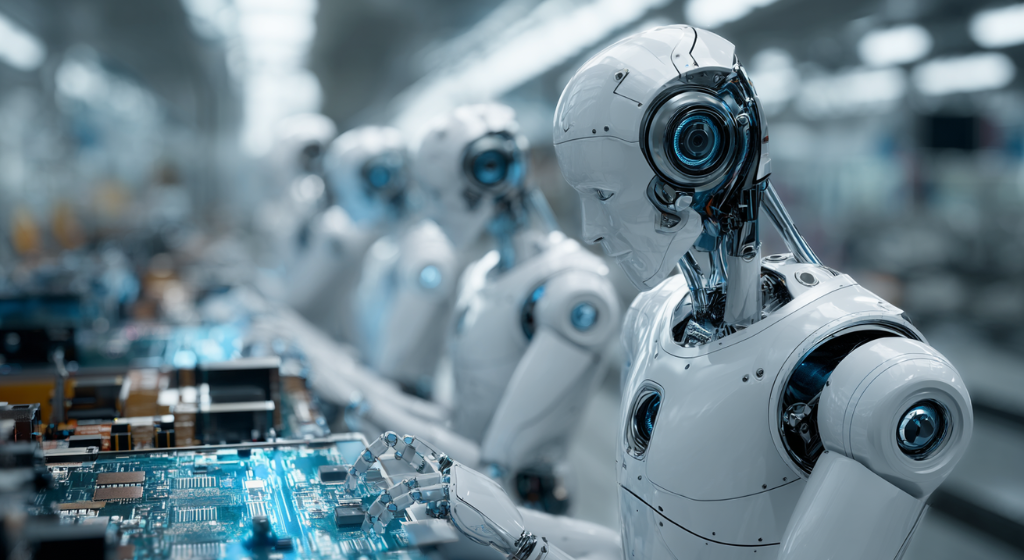
As AI adoption deepens, investors increasingly expect 2026 to mark a turning point where automation moves from boosting productivity to actively displacing workers—intensifying job anxiety across the enterprise workforce. (Source: Image by RR)
Venture Capitalists Predict Significant Workforce Changes in 2026
Concerns about AI displacing workers are intensifying as new evidence suggests the threat is no longer hypothetical. As noted in an article in techcrunch.com, a November MIT study found that 11.7% of jobs could already be automated using existing AI tools, while employers have begun eliminating entry-level roles and citing AI as a justification for layoffs. As AI capabilities advance and adoption deepens, companies are increasingly reassessing how many employees they truly need.
According to a recent TechCrunch survey of enterprise-focused venture capitalists, workforce disruption is expected to become more visible in 2026, even though respondents were not directly prompted on labor impacts. Hustle Fund co-founder Eric Bahn described the coming year as an inflection point, where both repetitive roles and more complex, logic-driven jobs may be automated. Whether this leads to mass layoffs, productivity gains, or job augmentation remains uncertain—but investors agree that a major shift is coming.
Several VCs predict that AI budgets will directly cannibalize labor spending. Exceptional Capital’s Marell Evans expects increased AI investment to come at the expense of hiring, while Sapphire’s Rajeev Dham sees 2026 budgets reallocating resources from people to software. Battery Ventures’ Jason Mendel argues that AI will cross a critical threshold next year, evolving from a productivity aid into a system that automates work itself through autonomous agents, delivering on long-promised labor displacement in specific domains.
Not all observers believe AI will be the true cause behind workforce reductions. Antonia Dean of Black Operator Ventures warned that AI may increasingly become a scapegoat for layoffs, masking poor past decisions or broader cost-cutting efforts. While AI companies often claim their tools free workers for higher-value tasks, skepticism remains high. According to investors, fears about job automation are unlikely to ease in 2026, as enterprises confront the economic realities of deploying increasingly capable AI systems.
read more at techcrunch.com










Leave A Comment