


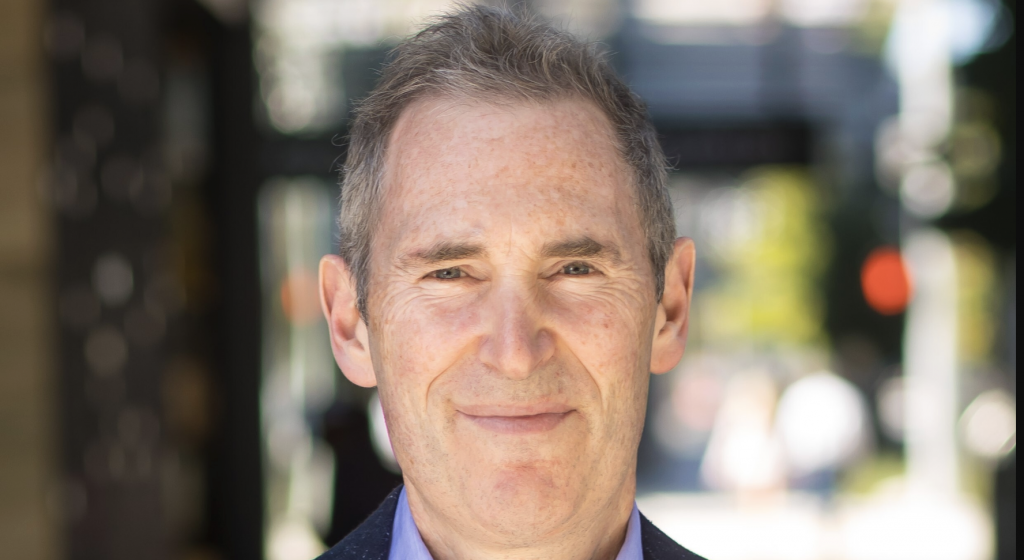
AI companies are aggressively recruiting neuroscientists as they push to improve energy efficiency, interpretability and innovation in their models—amid shrinking federal research funding and a growing exodus of academic talent into the private sector. (Source: Image by RR)
Meta’s New Hire Highlights Growing Shift from Neuroscience Labs to AI Companies
Artificial intelligence companies are aggressively hiring neuroscientists as they search for new ways to push past the limitations of large language models and design more efficient, interpretable systems. Once niche collaborators, neuroscientists are now among the most in-demand experts in the private sector, with major tech firms recruiting talent from top research universities. Aldo Battista, formerly at New York University’s Center for Neural Science, is one of the latest scholars to leave academia for Silicon Valley, joining Meta in September to work on the neural networks that power its content-recommendation systems. The appeal, he said, lies in having real-world impact and seeing immediate feedback from algorithmic changes rather than waiting months for peer review.
The trend, as noted in semafor.com, reflects the growing overlap between neuroscience research and the challenges facing AI developers today. While human brains process quadrillions of operations per second on just 20 watts of power, state-of-the-art AI models require energy on a vastly larger scale. Companies racing to scale up compute capacity need breakthroughs in efficiency, and many believe the next generation of AI systems will benefit from a deeper understanding of biological intelligence. At the same time, neuroscience provides analytical tools that can help explain why AI models make certain decisions—critical knowledge as companies pursue interpretability, reliability and transparency.
The surge of neuroscientists moving into industry is driven not only by lucrative compensation packages but also by worsening research conditions in academia. Federal science funding has tightened under the Trump administration, with an estimated $323 million in NIH neuroscience grants eliminated this year alone. Researchers say this has accelerated the “push and pull” dynamic: fewer academic opportunities and greater financial security in the private sector. Tech companies, now flush with capital and locked in intense competition, are broadening their hiring pipelines beyond traditional computer science talent to fields like cognitive science, behavioral neuroscience, and computational biology.
Veterans of both academia and industry say the shift marks a new phase in AI development. As the pool of classic machine-learning engineers approaches saturation, companies are betting that interdisciplinary research—especially insights from how human brains learn, manage energy, and generalize—could become a strategic advantage. With Meta, Apple, Google, Neuralink, and OpenAI all expanding their neuroscience-focused teams, the line between brain science and AI engineering continues to blur, potentially reshaping both fields for years to come.
read more at semafor.com











Leave A Comment